Anchor Plate Assy 02040J2128


Accessories
 17 Stainless Braid Hose Kit for Bosch Hydro-Boost® Power Brake Booster 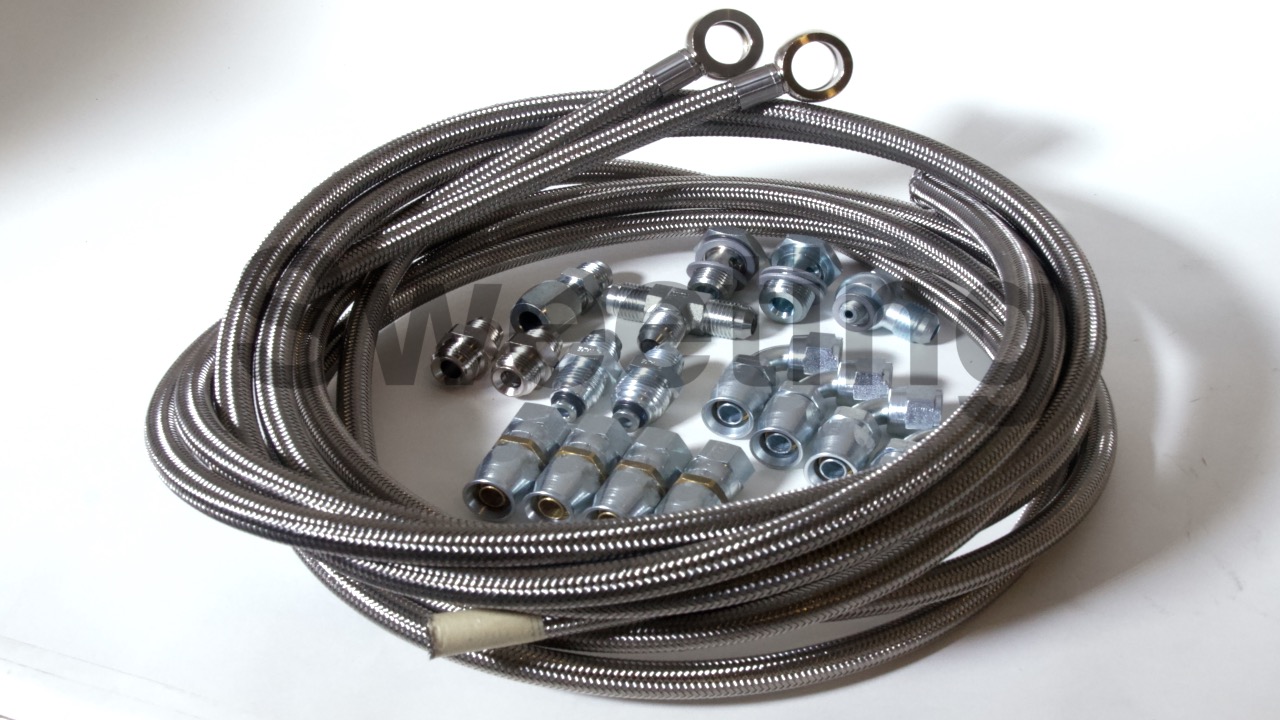
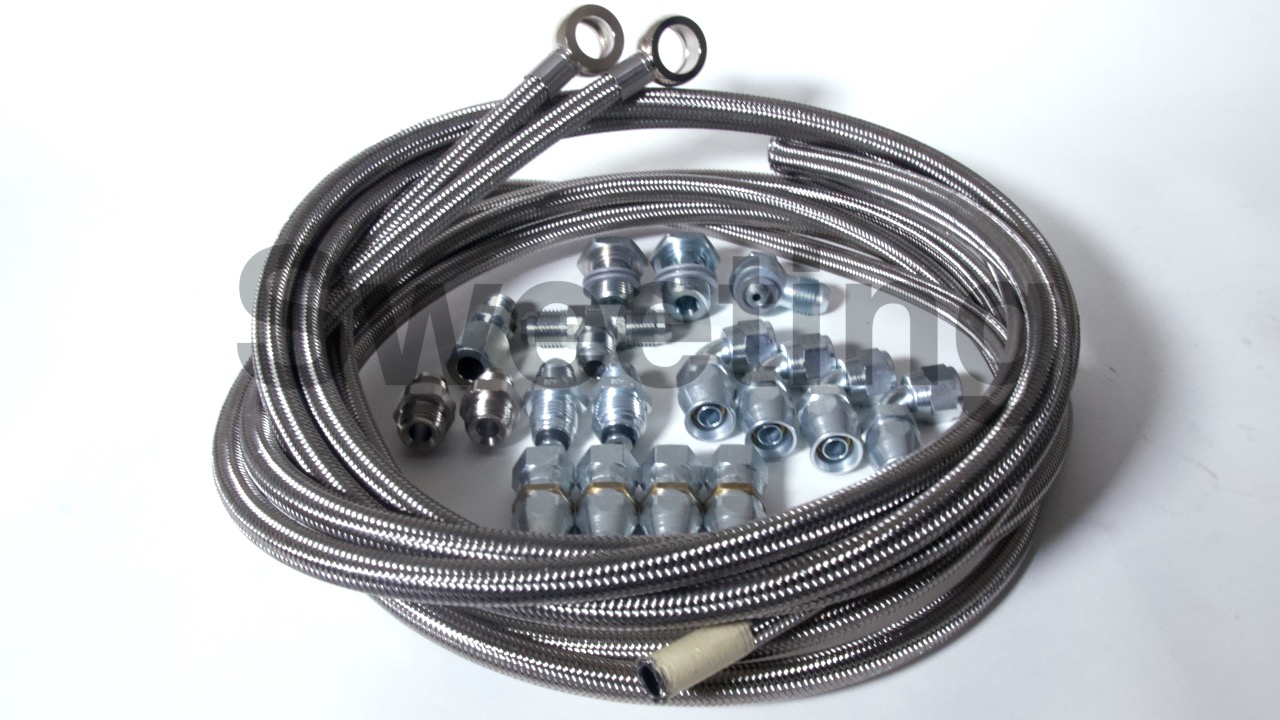 Please note in the comments at checkout what power steering pump and box or rack, and what booster you will be using. For example Type I or Type II GM pump, Stock Pump and Box for (year, make, model vehicle), or a Ford rack and pinion, etc. The high pressure hose has the stainless braid weave on the outside, and a PTFE (teflon) inner hose, uses high pressure threaded hose ends, and is rated for aircraft use. The high pressure hose goes from your power steering pump to the Hydro-Boost® and then from the Hydro-Boost® to your steering unit. There is about 1/10 of the pressure in the low pressure side of the power steering system. You only need a light duty rubber hose and hose clamps returning from your steering gear and from your Hydro-Boost® back to the pump reservoir. This kit uses high pressure hose and fittings all around, which is overkill by a factor of 10 on the low pressure side, but it looks good and it will have all the hoses match. |  Sweeting Performance Air-Hydraulic Power Brake SystemDiscover the ultimate in braking performance with the Sweeting Performance Air-Hydraulic Power Brake System. Engineered for both street and track, this air-hydraulic brake system combines advanced air-assist technology with precision hydraulic control to deliver unmatched stopping power and pedal feel. Ideal for hot rods, muscle cars, and custom builds, it’s a complete upgrade over traditional braking setups. Our Sweeting Performance review highlights the reliability, responsiveness, and ease-of-installation of these systems. Drivers report smoother engagement, faster brake response, and the confidence to handle high-performance applications safely. Whether you’re upgrading your classic car or building a new project, the air-hydraulic power brake system from Sweeting Performance sets a new standard in stopping performance. Trusted across forums, performance communities, and professional builds, Sweeting Performance consistently ranks as a top choice for enthusiasts seeking high-quality air-hydraulic brakes. Say goodbye to guesswork, complaints, or unreliable systems—this is the solution designed specifically for serious builders and performance drivers. Explore our selection of kits, components, and accessories to customize your setup. Upgrade your braking today and experience the proven power of Sweeting Performance Air-Hydraulic Power Brake Systems. |
 |  |
 Master Cylinders & Proportioning Valves |  Teves Mark II Electric-Hydraulic ABS Brake SystemThe Teves (ATE) Mark II electric-hydraulic ABS brake system was widely used across a range of Ford, Lincoln, General Motors, Saab, and European vehicles during the late 1980s and early 1990s. Unlike traditional vacuum-assisted braking systems, this design uses an electric motor-driven hydraulic pump, a pressure switch, and a nitrogen-charged accumulator to generate and store braking pressure. Sweeting Performance specializes in diagnosing, repairing, and upgrading Teves Mark II brake systems, providing engineered solutions based on decades of brake system experience originating from Power Brake Service. While advanced for its time, the Teves Mark II system is now known for component failures, complex diagnostics, and limited parts availability, making long-term repair increasingly difficult. How the Teves Mark II System Works
Common Teves Mark II ProblemsHard Brake PedalA hard brake pedal is typically caused by a failed accumulator or a non-functioning electric pump motor. Constant Pump OperationIf the pump runs continuously or warning lights remain illuminated, the accumulator is no longer holding pressure. Electric Pump FailureInternal seal leaks can allow brake fluid to enter the motor, causing electrical failure. Worn pump components may also prevent pressure buildup, leading to motor burnout. Pressure Switch FailureThe pressure switch may fail electrically or mechanically, resulting in improper pump cycling or warning light activation. Parts ObsolescenceMost Teves Mark II components are no longer manufactured, leaving limited options for repair through used or rebuilt parts. How to Diagnose a Teves Mark II Brake ProblemDiagnosis typically involves checking accumulator charge, verifying pump operation, and testing pressure switch function. A pump that runs constantly or does not run at all is a key indicator of system failure. Bleeding the Teves Mark II SystemFront Brakes: Can be bled using conventional methods. Rear Brakes: With the ignition on, slight brake pedal pressure activates the pump, allowing fluid to be pushed through the rear brake lines. Important: Avoid running the pump continuously for extended periods to prevent overheating. Modern Solutions and ConversionsDue to the increasing difficulty of maintaining the original system, conversion to a modern brake assist system is often the most reliable long-term solution. Hydro-Boost Brake SystemsHydro-Boost systems use power steering pressure to provide brake assist, delivering strong and consistent braking performance without relying on electric-hydraulic accessory components. Vacuum Brake ConversionsVacuum-assisted systems provide a simpler and widely supported solution using readily available components. Teves System Parts and AvailabilityReplacement parts for the Teves Mark II system are increasingly limited. Vehicle ApplicationsThe Teves Mark II system was used across multiple platforms including Ford, Lincoln, General Motors, Saab, Ferrari, and various European vehicles. Vehicle-specific conversion solutions may vary depending on application. SummaryThe Teves Mark II electric-hydraulic ABS system was an innovative design for its time, but today it presents significant reliability and serviceability challenges. With most components no longer in production, modern brake system conversions provide a more dependable and maintainable solution. |
 Teves (ATE) Hydraulic Brake Boosters, Master Cylinders, Accumulators, Charging Blocks, and Conversions | |
 |  |
 |